
Box Elder Bugs, Cluster Flies, and Lady Beetles: Central Illinois’ Fall Invaders
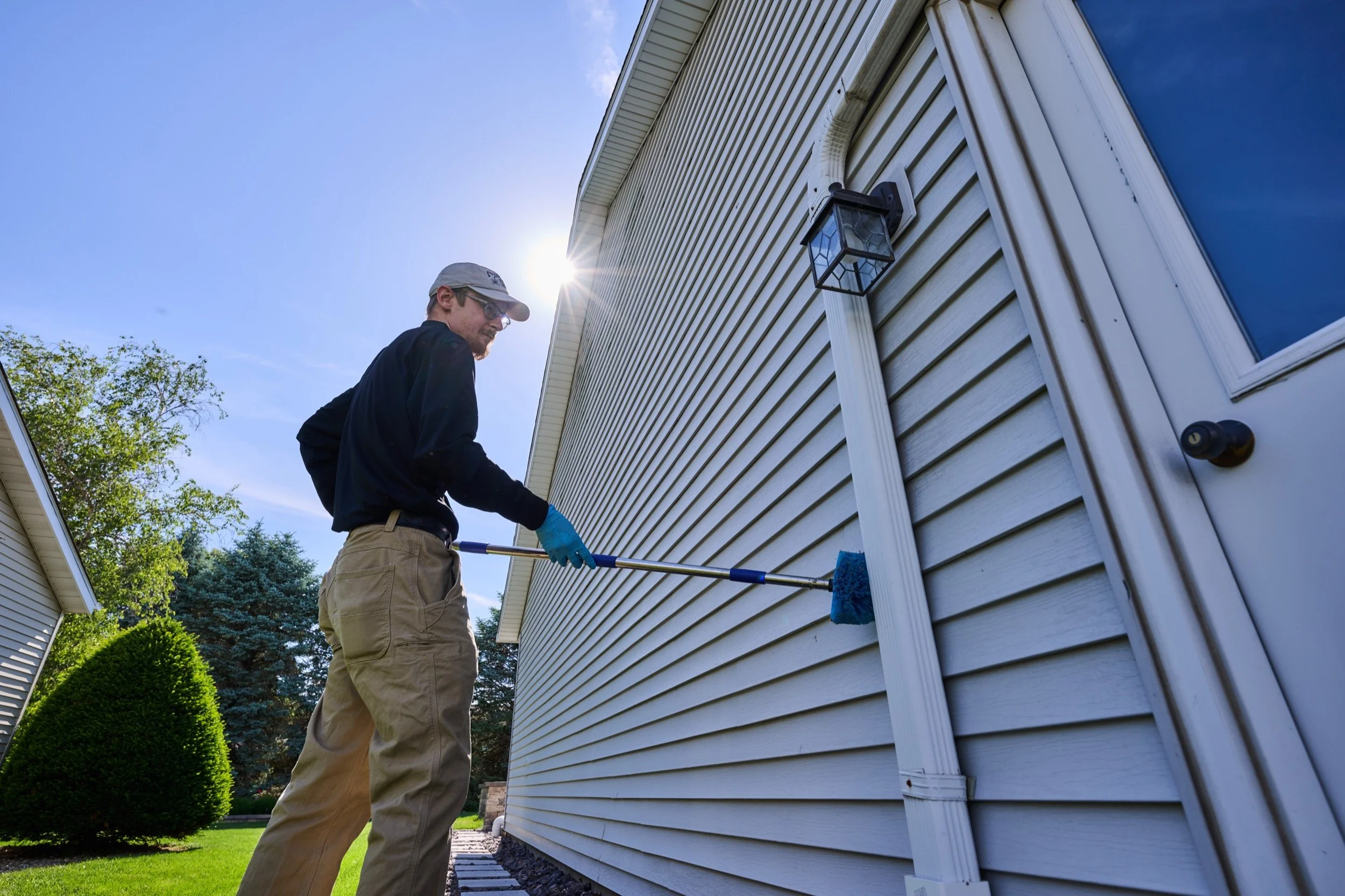
Markley’s Pest Services treats the sunny siding and soffit line of a Central Illinois home, the exact spots where box elder bugs and Asian lady beetles gather before moving indoors.
You know the scene. A warm afternoon in early October, and the south wall of the house is covered in bugs. Black and orange ones clustered on the siding. Sluggish flies bumping against an upstairs window. Orange beetles that look like ladybugs until one bites you.
If you live in Peoria, Morton, Washington, or anywhere across the Tri-County area, this happens every year. These are overwintering pests, and they are not there by accident. They picked your house on purpose.
Meet the Three Worst Offenders
Box elder bugs are the black insects with red or orange markings that gather in large numbers on sunny walls. They feed on box elder and maple seeds all summer, which is why homes with those trees nearby get the worst of it. They do not bite, sting, or damage your house, but they stain surfaces with their droppings and they show up in numbers that unsettle people.
Cluster flies are larger and slower than a house fly, and they are the ones you find drifting around a window on a warm winter day. They spend the summer as parasites of earthworms in the soil, then move to structures in fall. They tend to gather in attics and wall voids, which is why they seem to appear from nowhere in January.
Asian lady beetles are the ones people mistake for native ladybugs. They are more orange, often have an M-shaped marking behind the head, and unlike native ladybugs they do bite, they give off an unpleasant odor when disturbed, and they leave a yellowish stain that shows on walls and carpet. They can also trigger allergy symptoms in sensitive people.
Why They Pick Your House
All three are doing the same thing: looking for a protected place to sit out the winter. In nature that would be a cliff face, a rock outcropping, or a hollow tree. A house is a much better version of the same thing.
They find it by heat. On cool fall afternoons, the sun-warmed south and west walls of a home are noticeably warmer than the surrounding air, and that warmth is the signal. Once they are gathered on the siding, they only need to find one gap to get inside.
That is why the pattern is so predictable:
Light-colored homes and homes with lots of southern exposure get hit harder.
Older homes with settled siding, worn window frames, and unsealed soffits let far more of them in.
The problem often seems to arrive overnight, because a single warm day after a cold snap can trigger a mass movement.
Tip: Once these insects are inside a wall void, they are effectively out of reach. Every practical solution happens on the outside of the house, before they get in.
The Mistake Almost Everyone Makes
The vacuum comes out in October. That is treating the symptom.
By the time you are vacuuming lady beetles off a windowsill, the ones in your walls are already settled in and the rest of the population is still outside looking for a way in. You will be doing this until spring.
Warning: Do not spray insecticide into wall voids to kill overwintering insects. Dead insects inside a wall attract carpet beetles and other secondary pests that feed on them, and you can trade a seasonal nuisance for a year-round problem.
There is also a timing trap. Most homeowners call after the invasion starts. The treatment that actually works is a perimeter application to the exterior before they gather, usually in late August through September in Central Illinois. Miss that window and your options narrow considerably.
What Actually Keeps Them Out
Two things, in this order.
Seal the openings. This is the permanent fix and it is worth doing once, properly:
Repair or replace torn window and door screens.
Caulk around window frames, door frames, and where siding meets trim.
Seal gaps around utility penetrations, exhaust vents, and the electrical meter.
Screen attic and soffit vents.
Check that the chimney has an intact cap and screen.
Treat the exterior at the right time. A properly timed perimeter treatment on the sunny walls, roofline, and around entry points intercepts these insects while they are still gathering outside. Timing matters more than product here. Applied too early it breaks down before the insects arrive, and applied after they are inside it does very little.
When to Call Markley's
If last fall meant weeks of vacuuming, this is a solvable problem, and now is the time to handle it rather than in October.
Our technicians know the pattern on Central Illinois homes: which walls these insects target, where they get in on the housing styles common around Peoria and East Peoria, and when the treatment window opens each year. We also serve Morton, Washington, and the wider Tri-County area with local, licensed technicians and honest, no-pressure recommendations. More than 2,500 Tri-County families trust us.
Get Ahead of the Fall Invasion
The homeowners who do not deal with box elder bugs are the ones who treated before the bugs showed up. Markley's has protected Central Illinois homes since 1984.
✔ Free inspections
✔ Local, experienced technicians
✔ Family-safe treatments
✔ No-pressure recommendations
Call (309) 263-0341 or request your free inspection online today.
