
Termites Don’t Take the Winter Off: Sentricon Protection for Central Illinois Homes
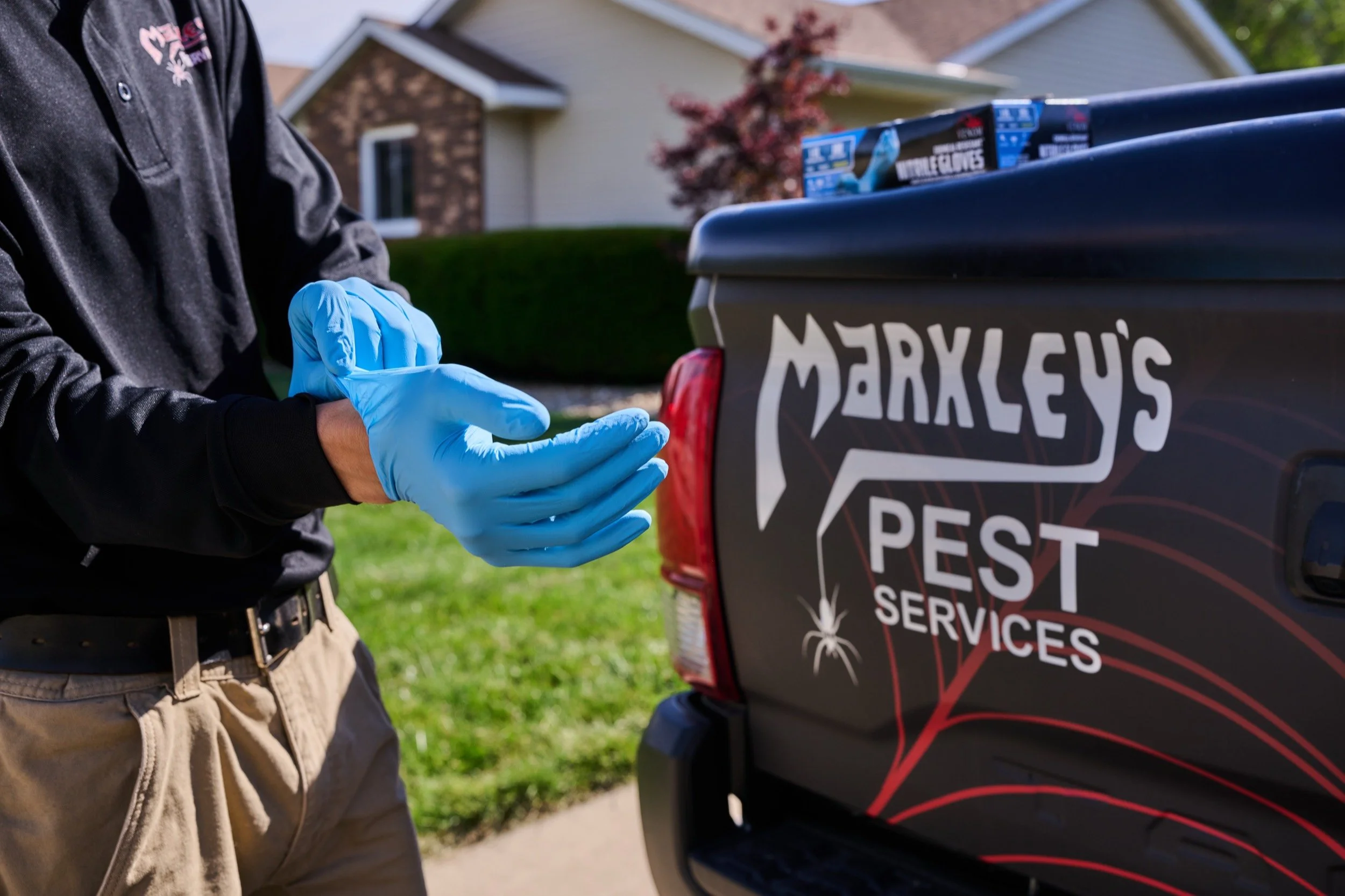
Markley’s is an authorized Sentricon dealer serving Peoria, Morton, Washington, and the wider Tri-County area with year-round termite protection.
Ask most homeowners when termites are a problem and they will say spring. That is when eastern subterranean termites swarm across Central Illinois, when the winged reproductives appear around foundations and window sills, and when the phone starts ringing.
Swarm season is when termites become visible. It is not when they become active. The colony that produced those swarmers was there long before, and it will still be there long after, quietly feeding on whatever wood it has found.
That gap between when termites are visible and when they are working is where most of the damage happens.
What Is Actually Happening Under Your Home
Eastern subterranean termites, the species we deal with throughout the Peoria area, live in colonies in the soil. They build mud tubes to bridge from the ground to wood, and they feed continuously. A mature colony can contain hundreds of thousands of workers.
The important part: they work below the frost line and inside the temperature-buffered soil against your foundation. Cold weather slows surface activity and stops swarming, but it does not shut a colony down, and the heat escaping through your basement or slab keeps the soil right against your foundation more hospitable than the open yard.
So the honest answer to "when are termites active in Illinois" is: essentially always, at varying intensity. You only see them for about two weeks a year.
Warning: Termite damage is specifically excluded from nearly every standard homeowners insurance policy. It is treated as preventable maintenance, not a covered peril, which means repair costs come out of your pocket.
Why They Are Hard to Catch Early
Termites eat wood from the inside out, following the grain and leaving the outer surface intact. A joist can be structurally compromised while looking completely normal from below. Unlike carpenter ants, they leave no sawdust piles.
The signs that do show up are easy to miss or to explain away:
Pencil-width mud tubes on foundation walls, piers, or floor joists.
Wood that sounds hollow when tapped, or gives under a screwdriver.
Discarded wings on window sills or in spider webs after a spring swarm.
Bubbling or uneven paint that looks like water damage.
Doors and windows that suddenly stick.
By the time any of those are obvious, the colony has usually been feeding for a while.
Liquid Barriers vs. Colony Elimination
There are two fundamentally different ways to deal with termites, and it matters which one is protecting your home.
Liquid barrier treatments apply a termiticide to the soil around and beneath the structure to create a treated zone that termites will not cross. Done well, it keeps them out of the building. It typically requires trenching around the entire foundation and drilling through slabs, garage floors, and patios. The barrier also degrades over time and can be breached by landscaping, grading changes, or plumbing work. Most importantly, the colony is still out there. You have moved it along, not removed it.
Colony elimination takes the opposite approach, and it is what the Sentricon system does.
How the Sentricon System Works
Markley's is an authorized Sentricon dealer, and it is what we install on Central Illinois homes.
Stations are placed in the soil around the perimeter of your house. Termites forage constantly and naturally, and when they find a station they feed on the bait inside, which they prefer over wood. Then they do what termites do: they carry it back and share it with the rest of the colony, including the workers that feed the queen.
The colony eliminates itself from the inside. Not repelled, not redirected. Gone.
What that means practically:
No trenching and no drilling through your slab, garage floor, or patio.
Nothing injected into the soil around your home, which matters to a lot of families.
Ongoing monitoring. Stations are checked on a schedule, so activity gets found during a routine inspection rather than when you notice damage.
Continuous protection, which is the whole point given that colonies do not follow the swarm calendar.
Sentricon is the system used to protect the Statue of Liberty and the White House grounds. It works the same way on a ranch home in Morton.
Tip: If you already have termite protection, find out what kind it is, when it was installed, and when it was last inspected. A liquid treatment done a decade ago by a previous owner is not the same as active, monitored protection today.
Why This Matters for Real Estate
If you are selling, a termite inspection is a routine part of many closings around Peoria, and discovering active termites during the inspection period is a bad time to find out. Deals get delayed, repairs get negotiated, and prices get adjusted.
If you are buying, a clean inspection tells you about today. Documented, ongoing protection tells you about the years ahead.
When to Call Markley's
Whether you are seeing signs, buying or selling a home, or simply want the question settled, it starts with an inspection.
A termite inspection is $120, and that amount goes toward the cost of treatment if you have termites and choose to move forward with us. We will tell you honestly what we find, including if the answer is that you have nothing to worry about.
We serve Peoria, East Peoria, Morton, Washington, and the wider Tri-County area with local, licensed technicians and honest, no-pressure recommendations. More than 2,500 Tri-County families trust us.
Protect Your Biggest Investment
Your home is likely the largest asset you own, and termite damage is the kind you do not see until it is expensive. Markley's has protected Central Illinois homes since 1984.
✔ $120 termite inspection, credited toward your treatment
✔ Authorized Sentricon dealer
✔ Local, experienced technicians
✔ No-pressure recommendations
Call (309) 263-0341 or schedule your termite inspection online today.
